SEO and social media: making your business easier to find
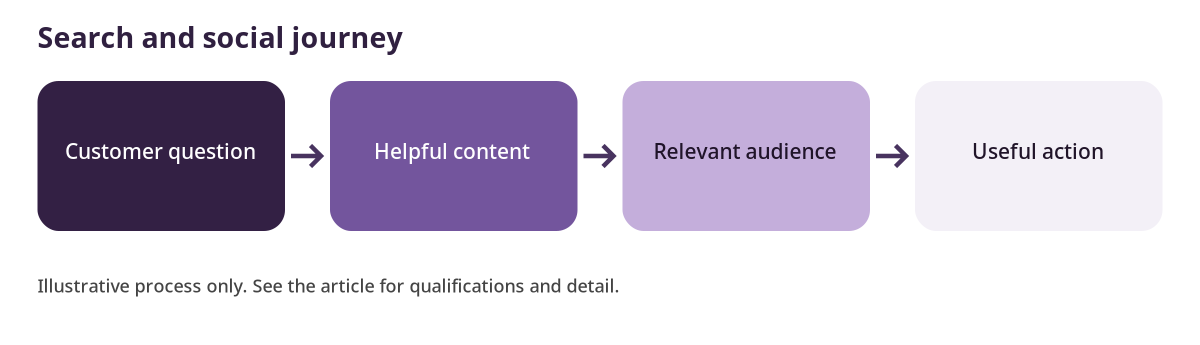
A business can post every day on social media and still struggle to reach the people who need its services. Another may have an excellent website that nobody finds when searching for a local supplier. Search optimisation and social media serve different purposes, but both work better when they begin with what customers are actually trying to do.Start with the questions customers ask
Imagine someone looking for an electrician who can inspect a rented property. They may search for a specific service, a nearby town or an explanation of what the inspection involves. A useful website page answers the real question, explains who provides the service and makes it easy to take the next step. Repeating a search phrase dozens of times does not make a thin page helpful. Search engines discover and interpret pages using many signals. Clear page titles, understandable headings, relevant links, descriptive text and technically accessible pages help them make sense of content. But there is no honest way to guarantee a particular organic position in Google results. Search visibility depends on competitors, location, the search itself and changes beyond any one agency’s control.A social post has a different job
People scrolling through social media are not always actively shopping. A photograph of a completed project, a useful explanation of a seasonal issue or a short answer to a common question may introduce the business to someone who later needs it. The post should still be accurate, relevant and recognisably written in the business’s voice. Rather than copying identical messages across platforms, think about where customers spend time and what they find useful there. A business serving local households may need a different approach from a specialist supplier speaking to procurement teams. Consistent, useful activity is more valuable than filling a calendar with generic posts nobody wants to read.Measure the journey, not just the applause
A popular post might attract attention but produce no enquiries. A quieter article could bring in a handful of people who are ready to contact the business. Decide what success means before launching a campaign. For a service business it could be qualified enquiries; for a local shop it could be useful direction requests or purchases. Then examine whether the website actually supports those actions. Analytics can help explain patterns, but numbers need context. A rise in visits during a promotion does not prove long-term growth, and a fall in impressions may have several possible explanations. It is sensible to compare like-for-like periods and record changes to the website or campaigns before drawing conclusions.Be careful with customer data and claims
Marketing is not exempt from privacy rules. The ICO explains that business-to-business marketing can involve different PECR requirements depending on the communication channel and whether the recipient is a company or an individual subscriber, such as a sole trader. Where personal data is used, UK GDPR obligations may apply even if the contact details are published on a business website. This matters when using mailing lists, contact forms, social messages or audience targeting. Review the legal basis, privacy information, objections and any consent requirements for the specific activity. Avoid assuming that every business email address is automatically fair game for every marketing method. Statements about awards, customer results or savings should also be supported by evidence. A polished design cannot make an inaccurate claim acceptable. Build a simple approval process so somebody checks factual assertions, photographs, permissions and the landing page before a campaign is published.Give useful content time to work
Search optimisation and social publishing are ongoing activities, not a switch that produces guaranteed results overnight. Regularly improve articles that leave customers confused, correct out-of-date information and make sure important services are easy to find. A small collection of genuinely helpful pages and well-chosen posts is a stronger foundation than a large pile of repetitive content.